

Rice feeds billions, yet those who grow it often live in extreme poverty. In Central and East Java, smallholder rice farmers face a paradox: global demand for rice is rising, but government-regulated prices keep their incomes stagnant while input costs soar. This project addresses this injustice by supporting rice farming communities to adopt Sustainable Rice Platform (SRP) practices—proven methods that increase yields, reduce water use by 20%, and cut greenhouse gas emissions by 50%. By building farmer organization capacity and advocating for government recognition of SRP-certified rice as 'specialty rice', we're enabling farmers to secure premium prices and better livelihoods while producing healthy, climate-smart rice for Indonesia's future.
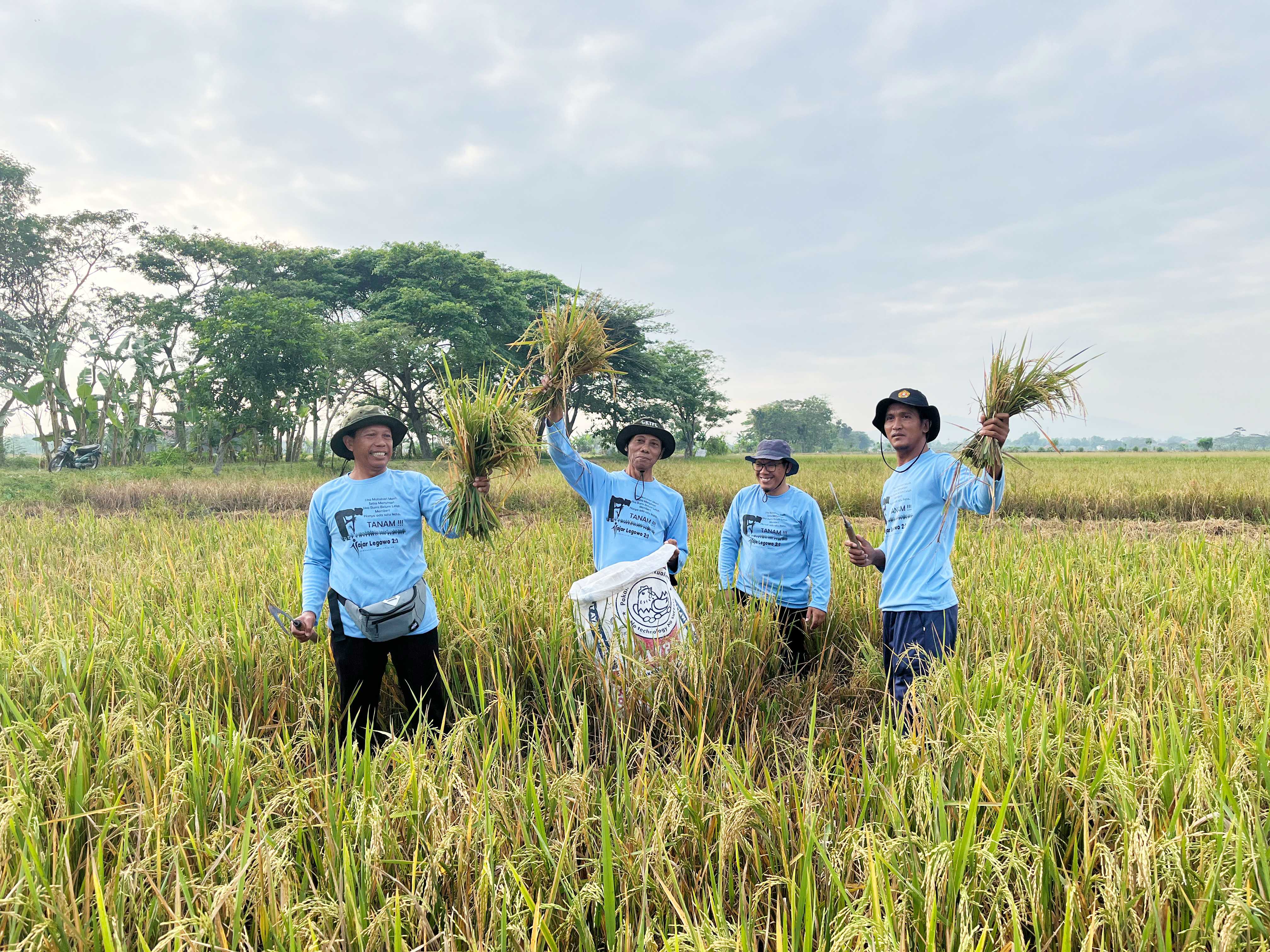
Indonesia's rice farmers are trapped in a system that works against them. Government-regulated minimum prices remain fixed at just USD 0.33/kg, while consumer prices have jumped from USD 0.60 to USD 0.95/kg in six months due to inflation and climate shocks. Meanwhile, the commonly promoted irrigated production system demands expensive chemical inputs that drain farmers' budgets without guaranteeing better yields.
Policy contradictions compound the problem: despite promoting self-sufficiency, Indonesia now imports rice. This has created government resistance to internationally certified standards like SRP, based on unfounded fears that certified rice targets only export markets—ignoring huge domestic demand from restaurants, hotels, and conscious consumers.
Tenant farmers and casual laborers face even harsher conditions with minimal wages and no voice. Without organized farmer groups and support for sustainable alternatives, the knowledge gap persists—leaving farmers vulnerable to climate change while ecosystems degrade.

This intervention takes a comprehensive, four-pronged approach to transform the rice sector from the ground up:
Building Partner Capacity
We strengthen local partners—Koalisi Rakyat untuk Kedaulatan Pangan (KRKP) and Rikolto Indonesia—with new tools and skills identified through their own capacity assessments. This ensures they can effectively support farmer organizations for years to come.
Scaling Sustainable Production
Farmers across five districts are being trained in Sustainable Rice Platform (SRP) production methods through Farmer Field Schools. SRP practices include alternate wetting and drying irrigation techniques, integrated pest management, and reduced chemical inputs. Previous phases showed a 30% decrease in chemical fertilizer use and a 20% increase in yields—an additional 0.5 tons per hectare without additional labor. These methods deliver real economic benefits: 10% higher income on average, 20% water savings, and 50% lower greenhouse gas emissions.
Strengthening Farmer Voice
We're empowering farmer organizations at multiple levels—from local Farmer Field Schools to district and national federations—to collectively advocate for their members' interests. A total of 115 farmers from Local Farmer Organizations will be trained in institutional management, visioning workshops, advocacy, and participatory monitoring. This includes defending the rights of tenant farmers and casual laborers who are often invisible in policy discussions.
Advocating for Recognition and Markets
Through multi-stakeholder platforms involving government authorities, agricultural extension officers, universities (including IPB Bogor and Aarhus University), and the private sector, we're building the case for recognizing SRP rice as 'specialty rice'. In Indonesia, 'specialty rice' has no government price ceiling, allowing farmers to negotiate freely and recover their production costs. We're also facilitating direct market linkages with buyers who want sustainable, high-quality rice.
By June 2027, this project will deliver measurable change across multiple dimensions:
For Farmers:
For Organizations:
For Markets and Policy:
For the Environment:
For Food Systems:
Funding:
Implementing Partners:
Research & Technical Partners:



