


Have you ever imagined that leftovers, dry leaves or even eggshells could become valuable nutrients for plants? On 8–9 January 2026, this simple question sparked curiosity and discovery among Grade 6 and 7 students from Nam Trung Yen, Yen Hoa and Truong Cong Giai secondary schools in Hanoi. The activity was part of the GoodFood@School project and took place under the experiential series “Rooting for Change”, focusing on organic composting. It was led by a group of students from the National University of Singapore (NUS), in collaboration with Rikolto and the Centre for Education and Environment (C&E).
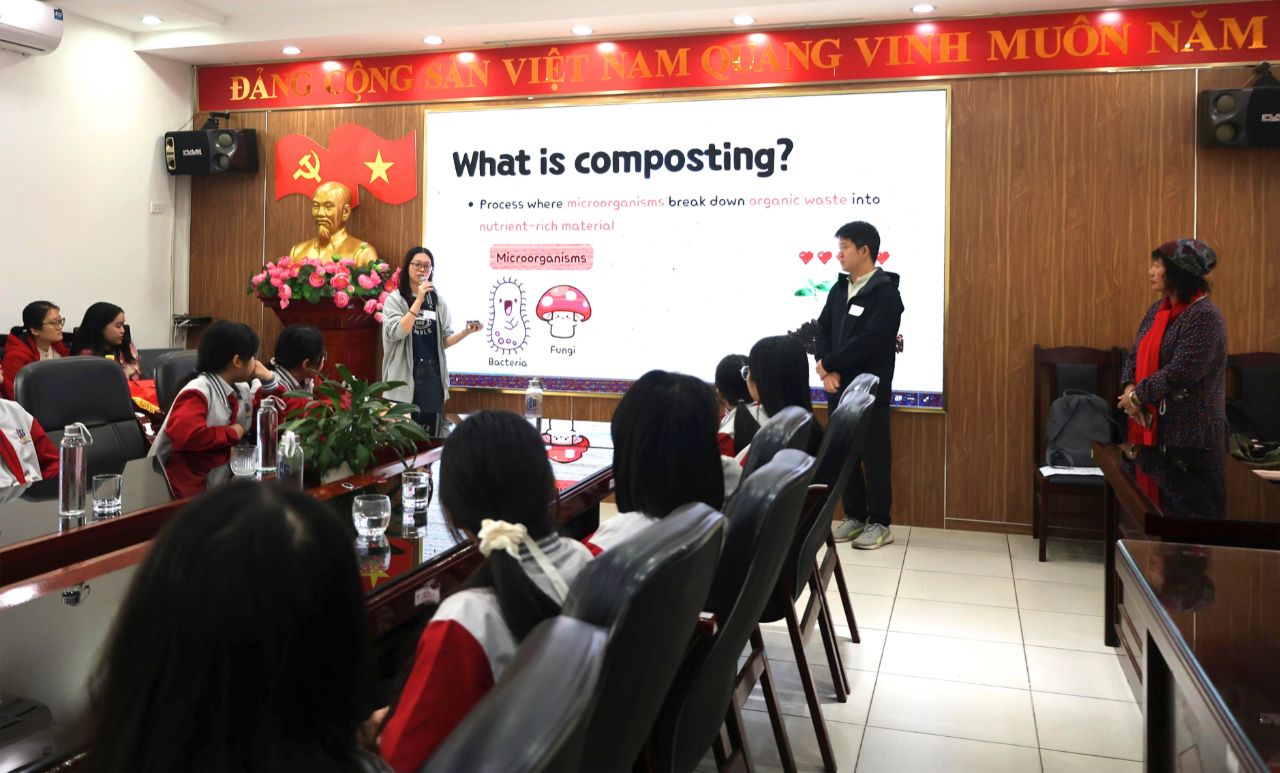
The sessions were facilitated by Jamie Ong, representing the IEx team from the NUS College (NUSC), the honours college of NUS, together with four fellow students and an academic supervisor. Rather than starting with theory, the team opened with familiar questions: “What did you have for breakfast?” and “Which dishes are often left unfinished at school lunch?”. From these everyday reflections, students began to see that food is not only about nutrition, but also closely connected to the environment. “I didn’t realise food waste could affect the environment that much,” one student shared after the discussion.
At Yen Hoa and Truong Cong Giai secondary schools, the sessions were conducted in English through small group discussions. Each NUSC student worked closely with a group, answering questions and exchanging ideas about composting – a topic still new to many of the secondary students. The classroom atmosphere quickly became lively, as students overcame language barriers and confidently voiced their thoughts. Phuc An and Tuong Minh, both Grade 6 students at Truong Cong Giai, said that after the session they “want to try composting at home to see how leftovers can turn into good soil for plants”.

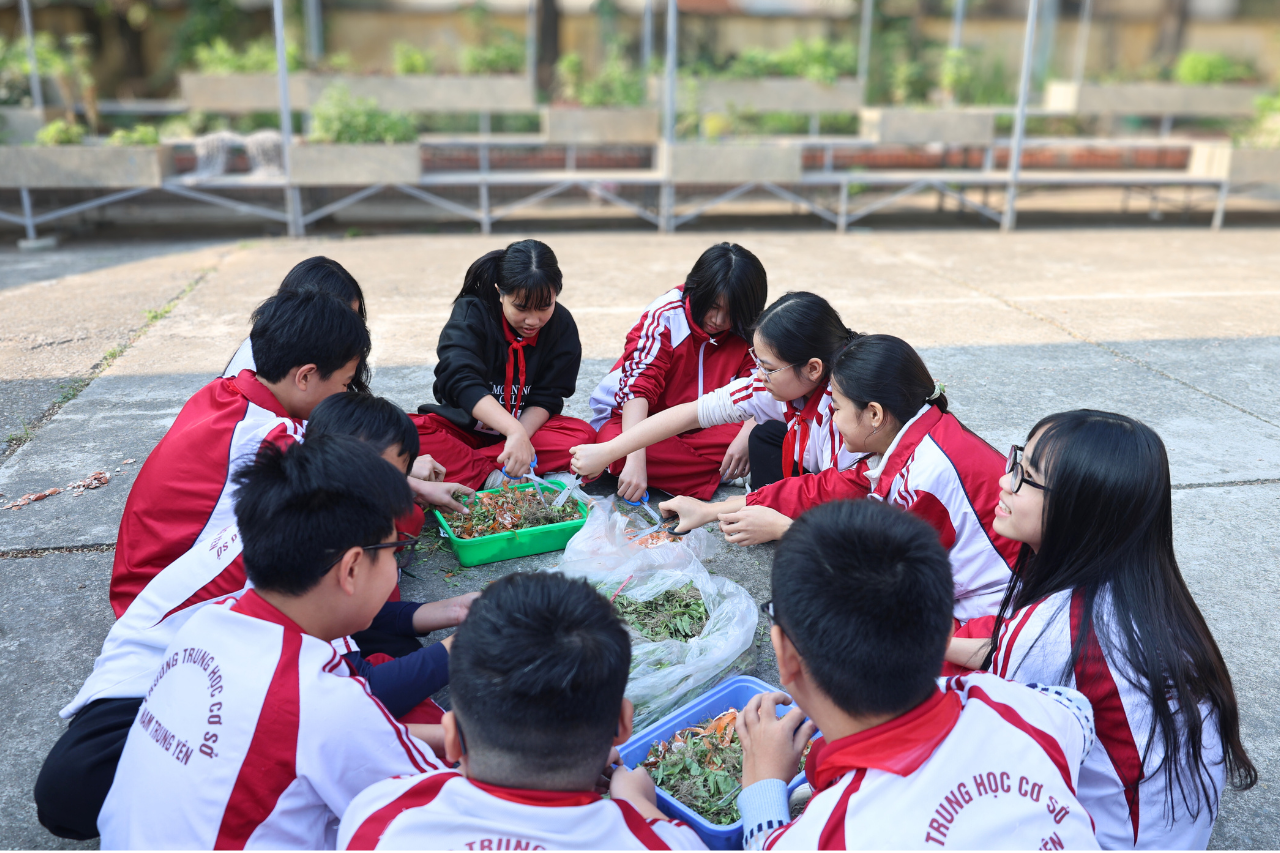
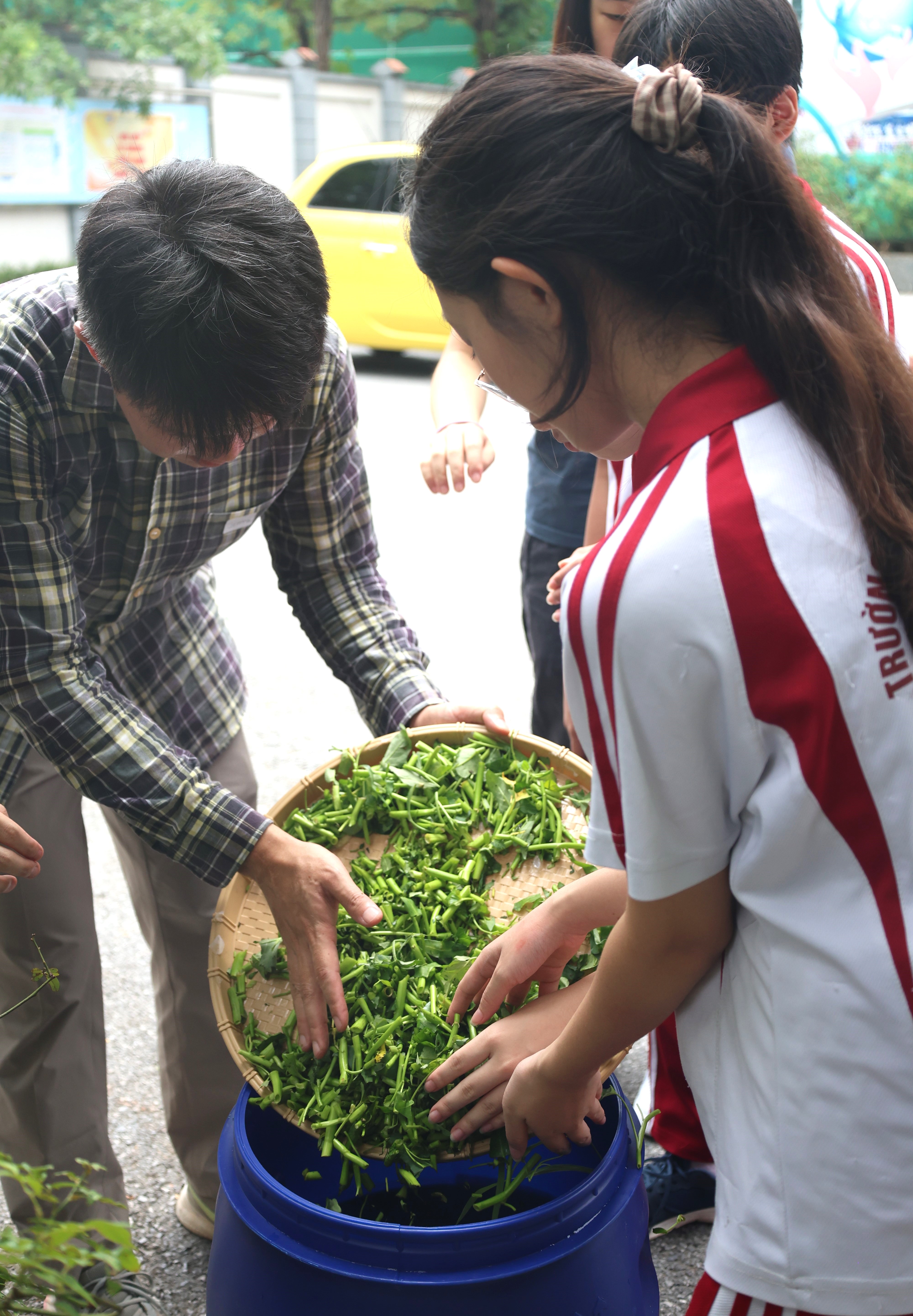
At Nam Trung Yen secondary school, the learning continued outdoors with a hands-on practice session in the school garden. Students chopped vegetables, collected dry leaves and crushed eggshells, carefully separating “green” and “brown” materials before layering them into compost bins. What might seem like simple steps made the concept of circularity tangible.
“I found the lesson very useful,” shared Minh Quan, a Grade 7 student. “I learned how to protect the environment and avoid food waste by composting, which helps keep the environment cleaner.”
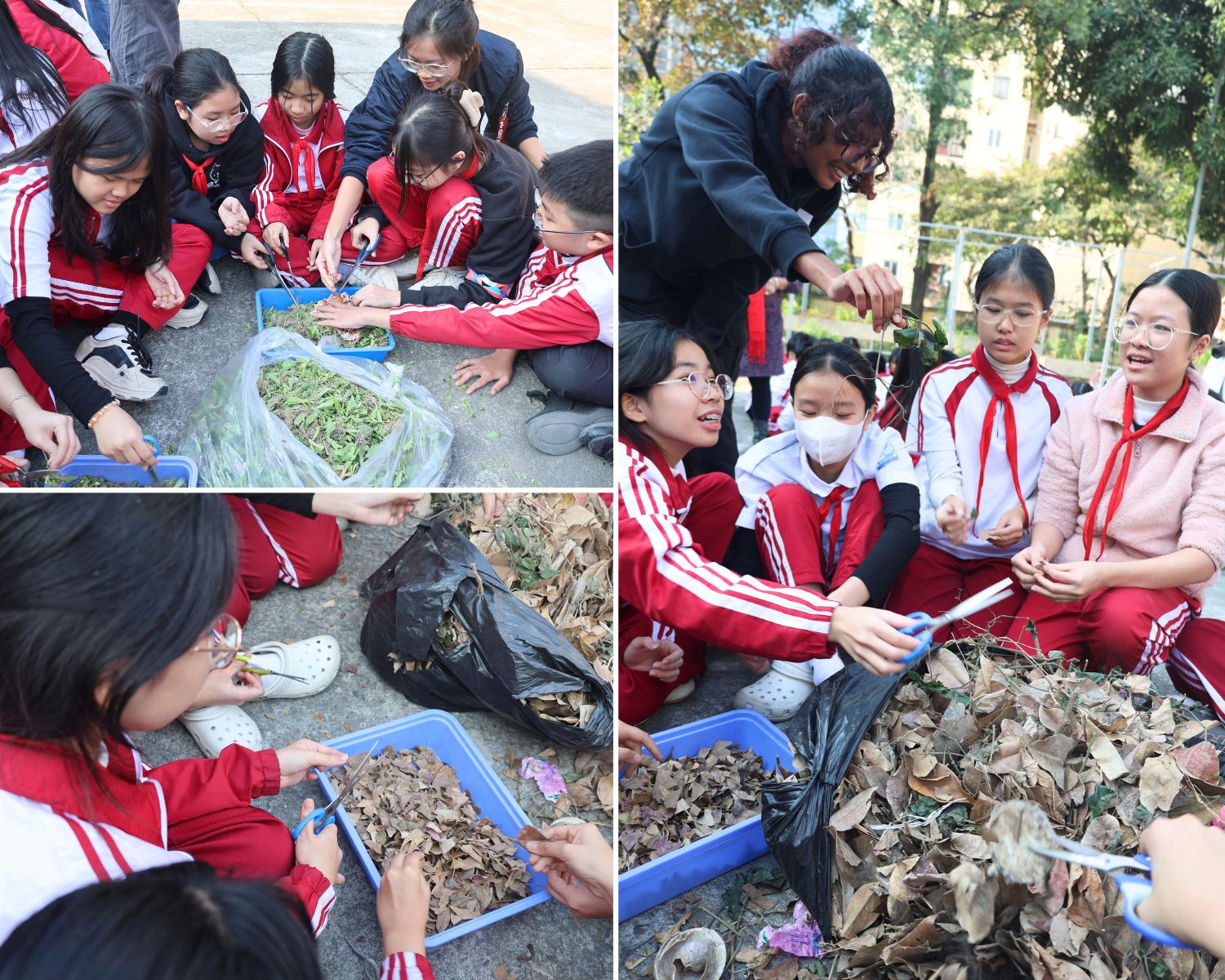
For Tue Lam, another student, the most meaningful insight was understanding how compost can nourish plants while reducing waste sent to landfill.
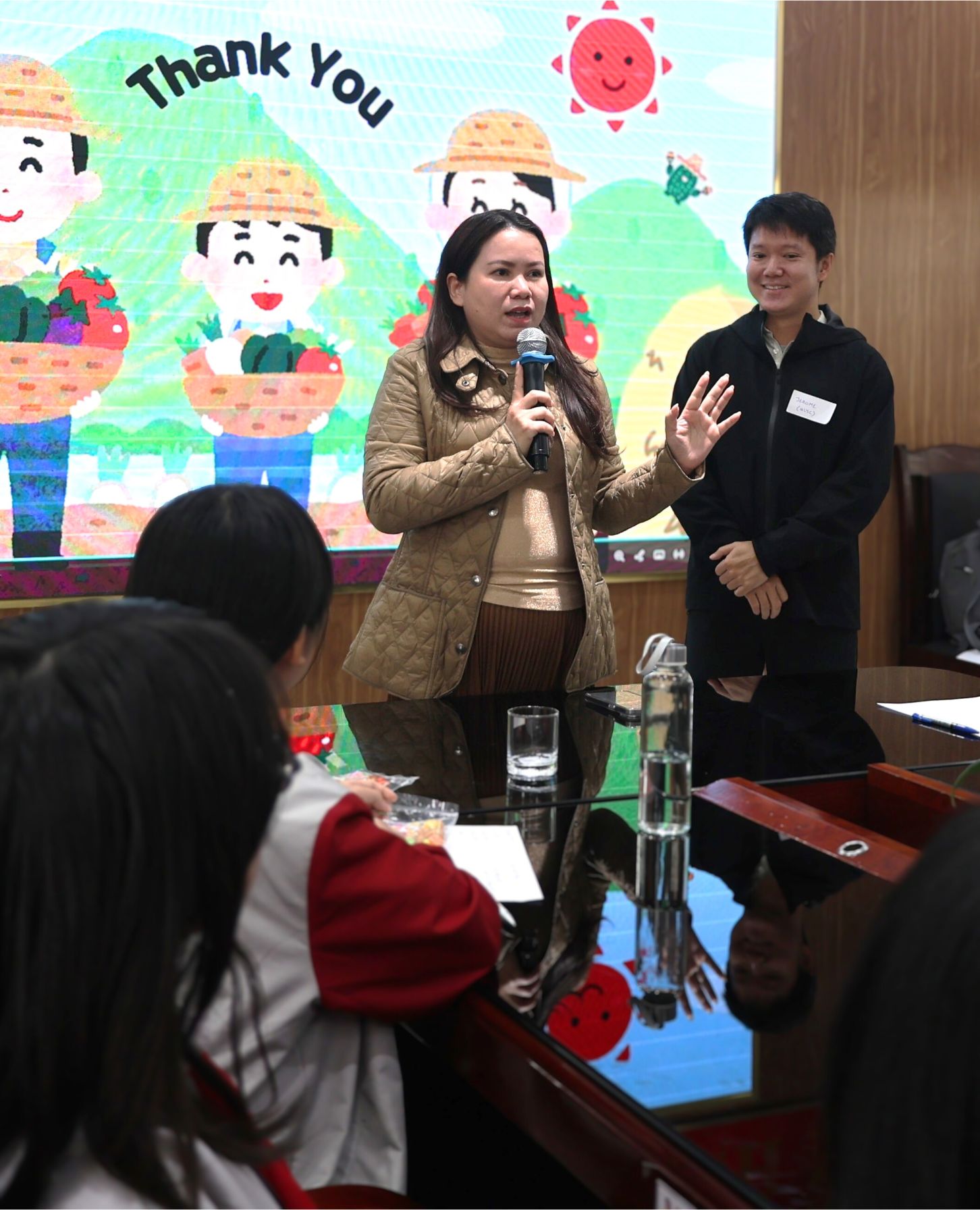
“We were delighted to welcome this initiative and remain fully supportive of meaningful activities like it. The activity is truly valuable – not only does it offer students opportunities for international exchange and broaden their knowledge, but it also nurtures their sense of environmental responsibility and encourages them to care for and cultivate green spaces.”
Earlier, another group of students from NUSC had organised interactive sessions at Yen Hoa and Nam Trung Yen secondary schools on healthy diets, using an interactive game and visual materials. The composting activities build on that journey –moving students from awareness about nutrition to practical environmental action, completing a meaningful learning cycle.
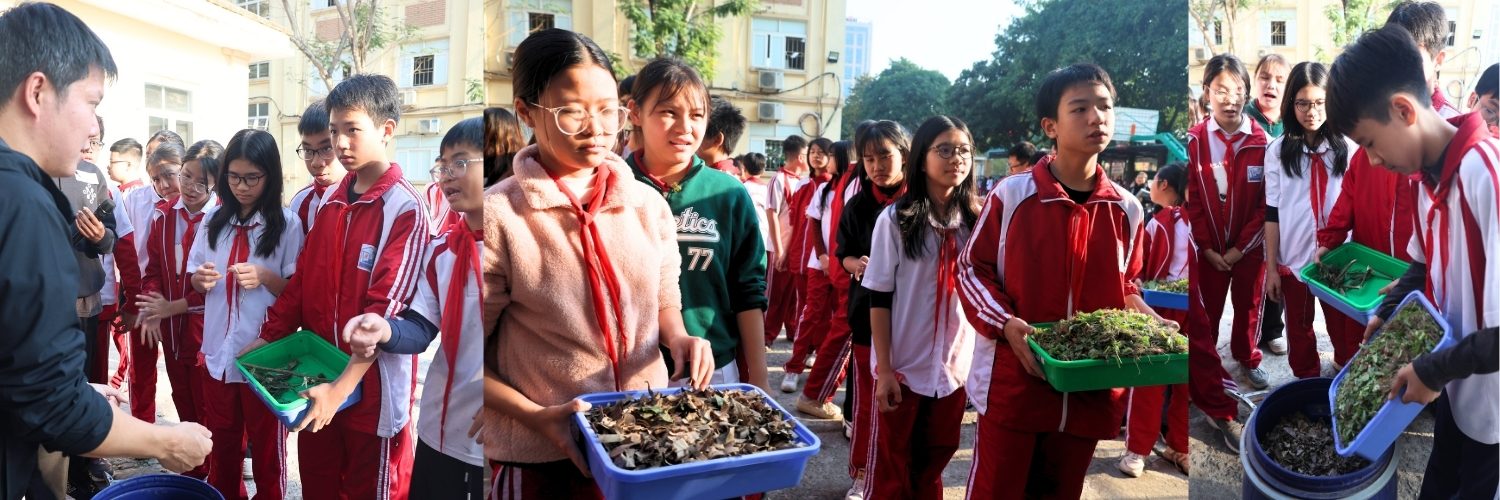
In the coming weeks, the NUSC team will return to continue supporting composting practice at Yen Hoa and Truong Cong Giai, while monitoring compost quality for use in the circular school garden at Nam Trung Yen. Until then, they will stay connected online with teachers and students to provide guidance and encouragement.
Through these small but concrete experiences, composting and food circularity are no longer abstract ideas, but are steadily turning into practical habits embedded in students’ daily lives. Eggshells, dry leaves and leftovers – once seen as waste – may now mark the beginning of a greener school garden, and of young changemakers growing alongside it, with a deepening sense of environmental responsibility.
.jpg)