
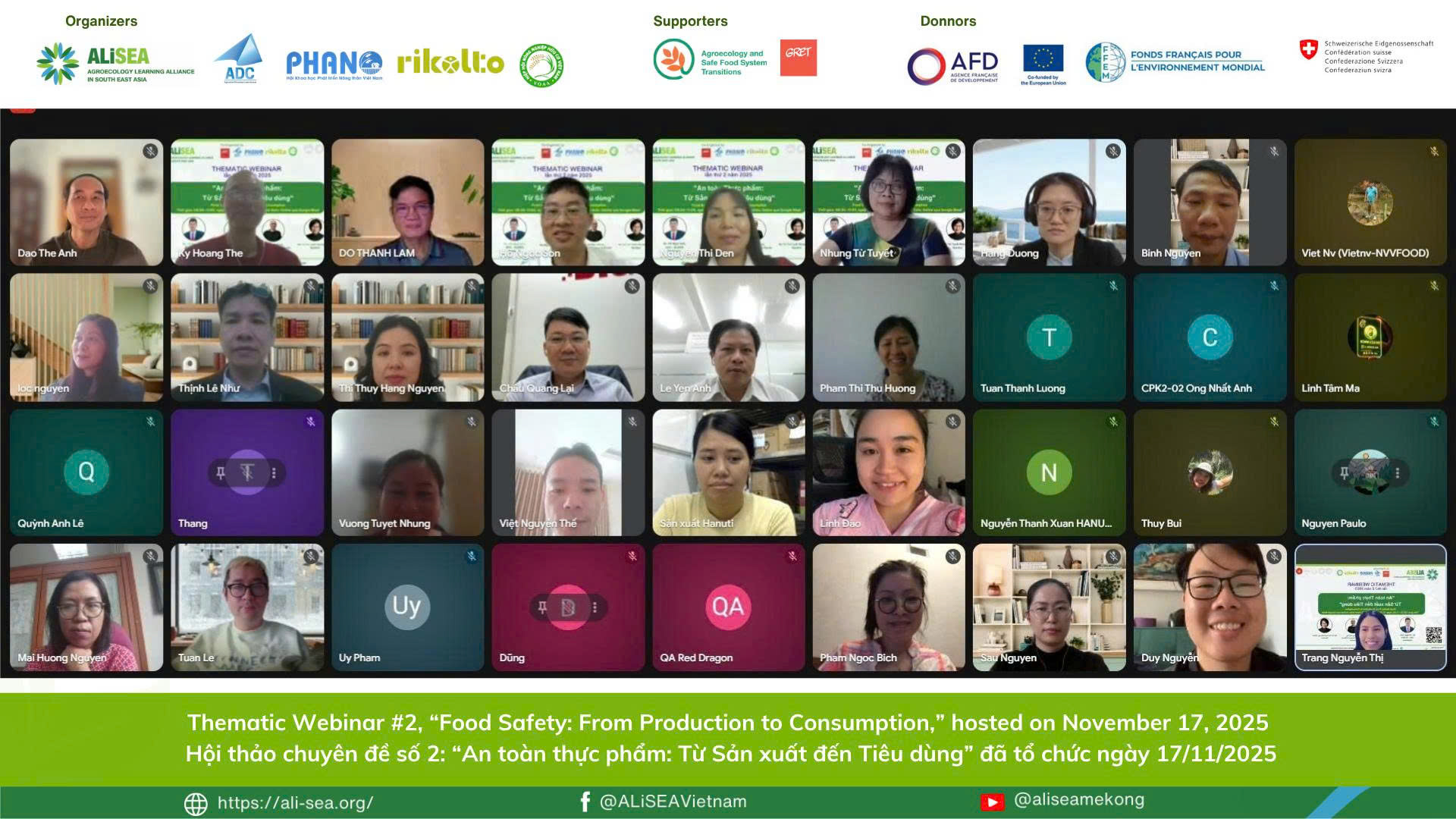
On 17 November 2025, the ALiSEA network organised the online thematic workshop “Food Safety: From Production to Consumption” with the participation of experts, development organisations and researchers from Vietnam and abroad. The workshop aimed to share scientific evidence and practical experiences in promoting agroecology and building more sustainable food systems.
The event gathered valuable inputs from ALiSEA members as well as organisations that are directly implementing and promoting agroecological approaches in Vietnam, including key initiatives of Rikolto under the Good Food for Cities programme.
The workshop opened with a presentation from Ms. Nguyen Thi Den, Good Food for Cities Programme Officer, Rikolto in Vietnam, who shared practical insights from the development of a cucumber value chain model in Tuyen Quang province. By connecting An Hoa Cooperative (Vinh Phuc province) with local farmer groups, the project effectively leveraged advantages in labour, land availability and geographical location to expand a concentrated production area.
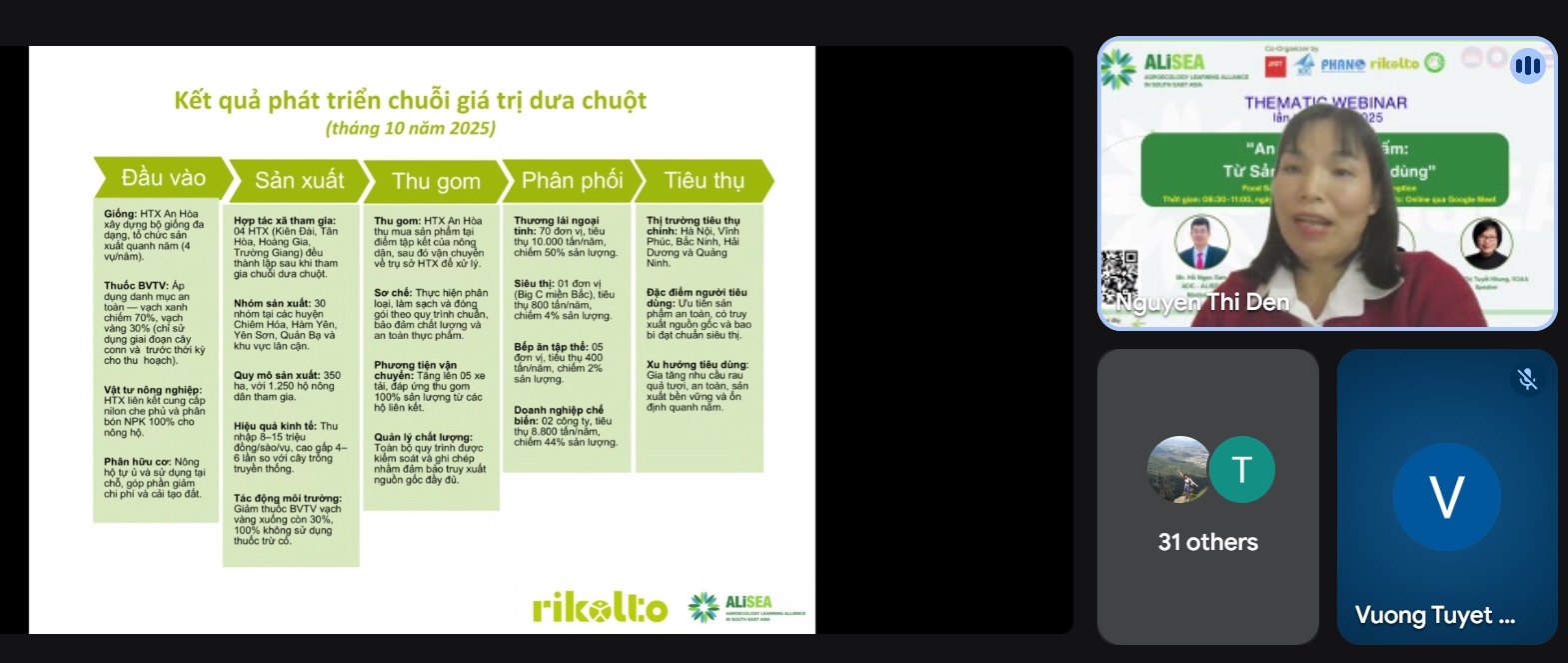
Key interventions included technical training, the application of the Participatory Guarantee System (PGS), implementation of QR code-based traceability, upgrading preliminary processing facilities to meet standards, and facilitating the signing of direct purchasing contracts. These efforts contributed to improving productivity, increasing farmers’ incomes, and building trust-based and sustainable relationships between producers and purchasing enterprises. To date, more than 330 farmers, including 157 women, have directly benefited from this model.
From a research perspective, Mr. Hoang The Ky – a PhD candidate at the University of Galway (Ireland) and Good Food for Cities Programme Officer at Rikolto in Vietnam – presented findings from a systematic review on the impacts of agroecological practices on dietary diversity. An analysis of 40 studies conducted in 31 developing countries showed that around 90% of the studies reported a positive correlation between the diversification of crops and livestock and improvements in dietary diversity scores. Notably, models applying two or more agroecological practices demonstrated more significant positive impacts than single-practice interventions.
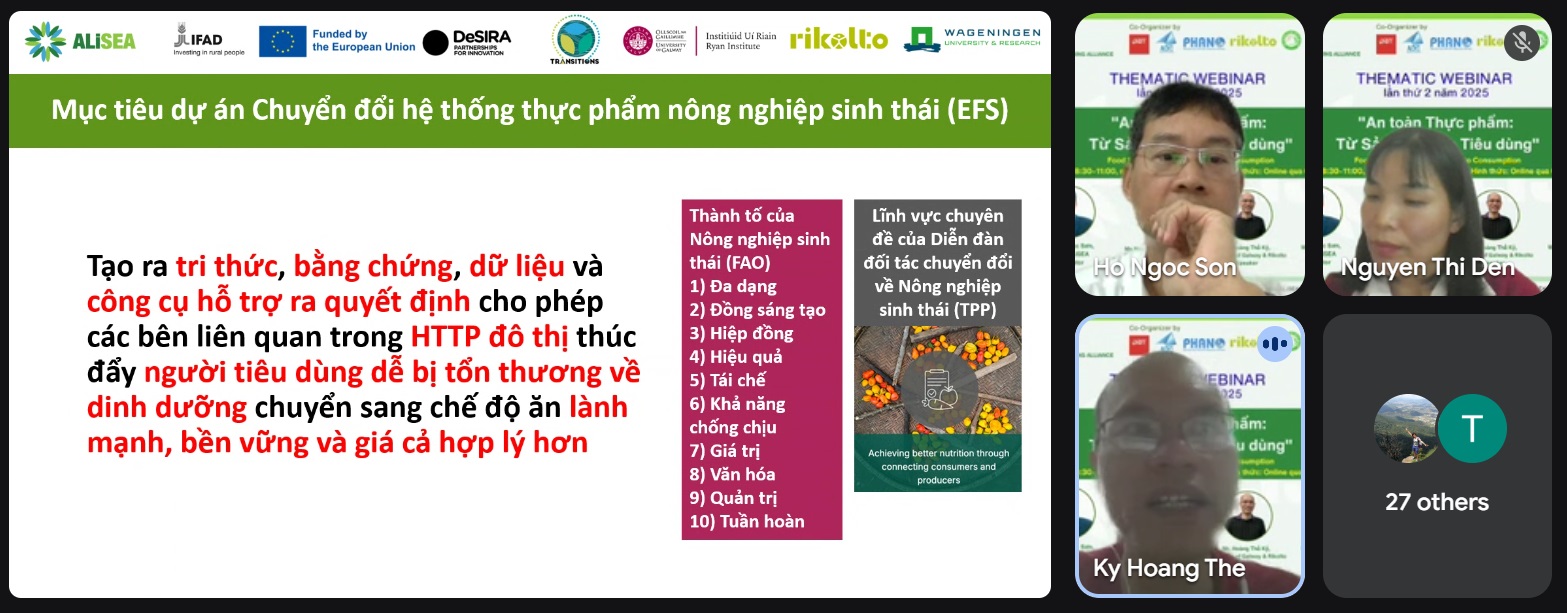
Mr. Ky emphasised:
“Agroecology is not only a sustainable farming approach, but also a potential solution for improving diet quality, especially for nutritionally vulnerable populations.”
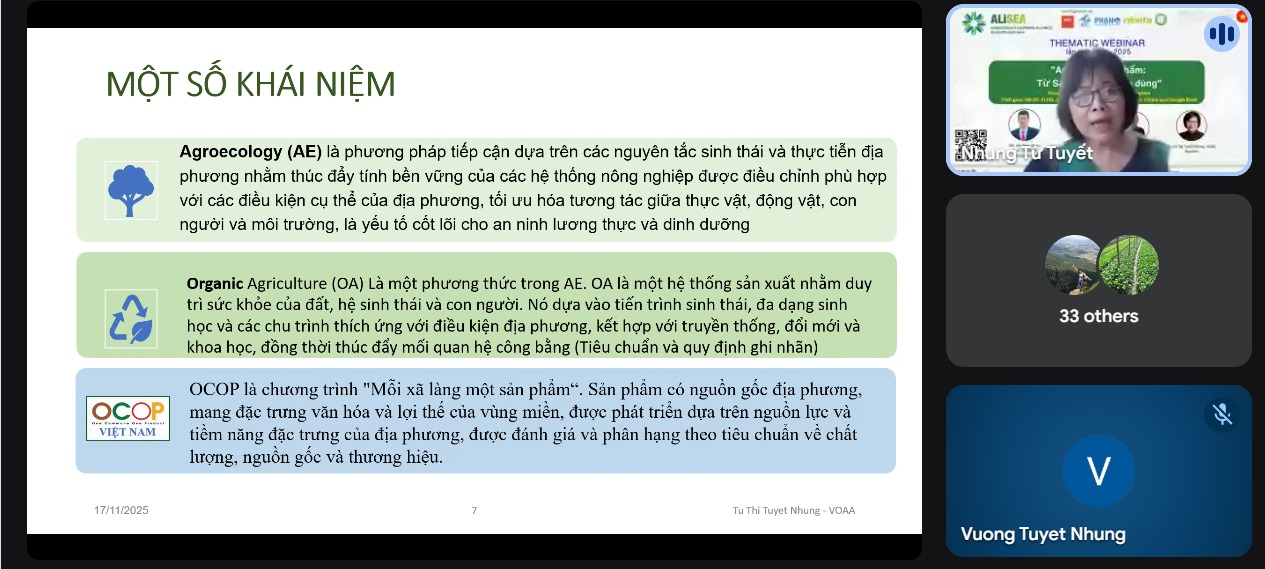
From the consumer perspective, Ms. Tu Tuyet Nhung, Standing Committee Member of the Vietnam Organic Agriculture Association(VOAA), shared practical knowledge on how to identify organic and agroecological food products. She highlighted the importance of properly understanding standards, certification schemes and labelling systems (including PGS, TCVN and international certifications), and clearly distinguishing between “natural food”, “organic food” and “agroecological food”. This knowledge enables consumers to become more proactive and responsible in choosing safe and environmentally friendly food.
Based on the exchanges and discussions at the workshop, experts agreed that stronger policy interventions are needed to improve food safety and agricultural product quality. In particular, the role of independent bodies in assessing and reviewing standards such as organic certification and VietGAP should be strengthened, while locally appropriate models such as PGS should continue to be promoted. At the same time, more meaningful participation of professional associations and consumer communities in monitoring, advocacy and information dissemination is essential to enhance transparency, strengthen trust, and promote responsible practices throughout the entire food value chain.
The ALiSEA 2025 workshop once again reaffirmed that strong linkages between scientific research, production practices, market mechanisms and consumer engagement form a critical foundation for advancing a fair, healthy and sustainable food system in the future – which also lies at the core of Rikolto’s work in Viet Nam and globally.


.jpg)