
On a late autumn morning, the empty plot of land behind Nam Trung Yen Secondary School in Yen Hoa Ward, Hanoi, suddenly filled with cheerful voices. Rows of newly sprouted vegetables, neatly arranged flower beds, and groups of students carefully observing the plants around them while sketching every detail onto their drawing sheets. For the students, this small school garden is no longer just a green space – it has become an open classroom, where knowledge can be touched, seen, and nurtured day by day.
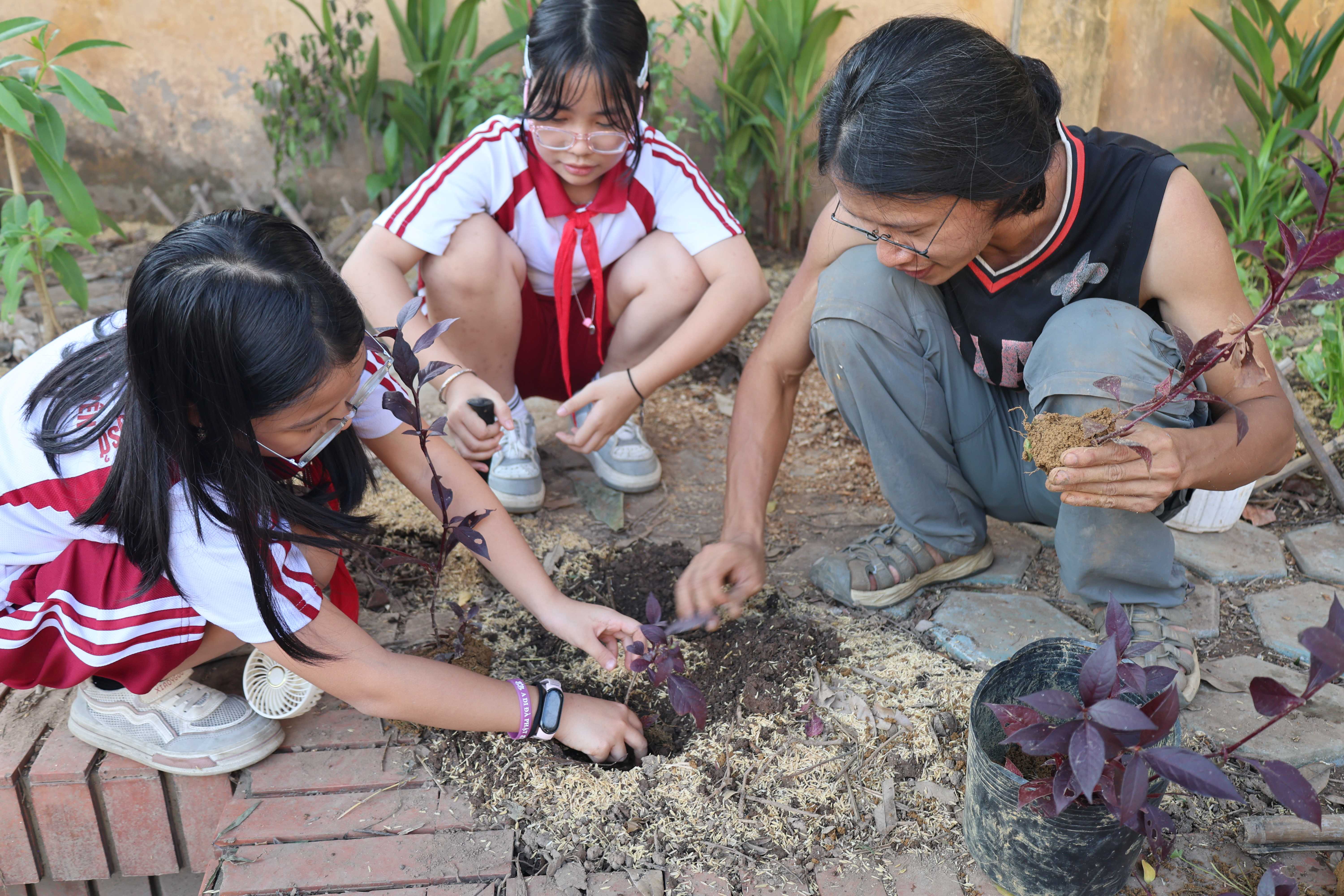
The Circular School Garden at Nam Trung Yen Secondary School is part of the “GoodFood@School” pilot programme, implemented by the Center for Development of Community and Environment (C&E) and funded by Rikolto during 2025–2026. It offers a unique experiential space where students learn about nutrition, health, and the environment, and directly practice chemical-free organic gardening.

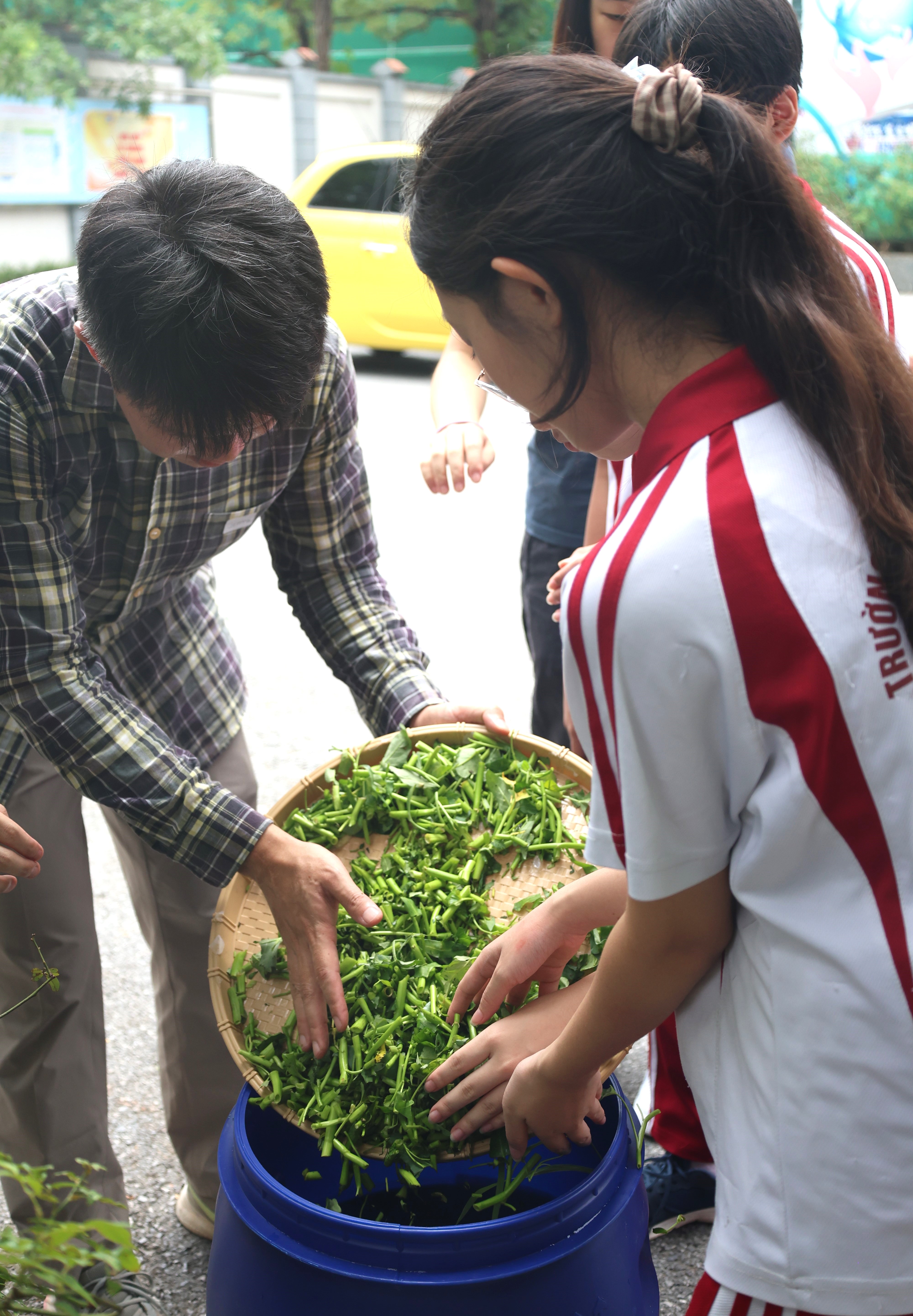
Launched in September 2025, the garden was built following a closed-loop circular model: transforming organic waste into natural fertiliser. The garden covers 78 m², with an additional 12 m² tool shed and a15 m² reinforced steel rack system for growing boxes. Materials were maximised for reuse: repurposed foam boxes, old bricks for pathways, recycled plastic panels, and reclaimed bamboo and wood for fencing – reducing construction waste.
Previously, the school had used this courtyard area as a garden, but it had limited plant varieties, the soil had not been improved, and the space was not closely integrated with learning activities. The new school garden now hosts nearly 40 native plant species - such as lemongrass, chives, aloe vera, polyscias, perilla, katuk, arrowroot, bird-of-paradise - creating a multi-layered ecosystem rich in colours, scents, and functions.
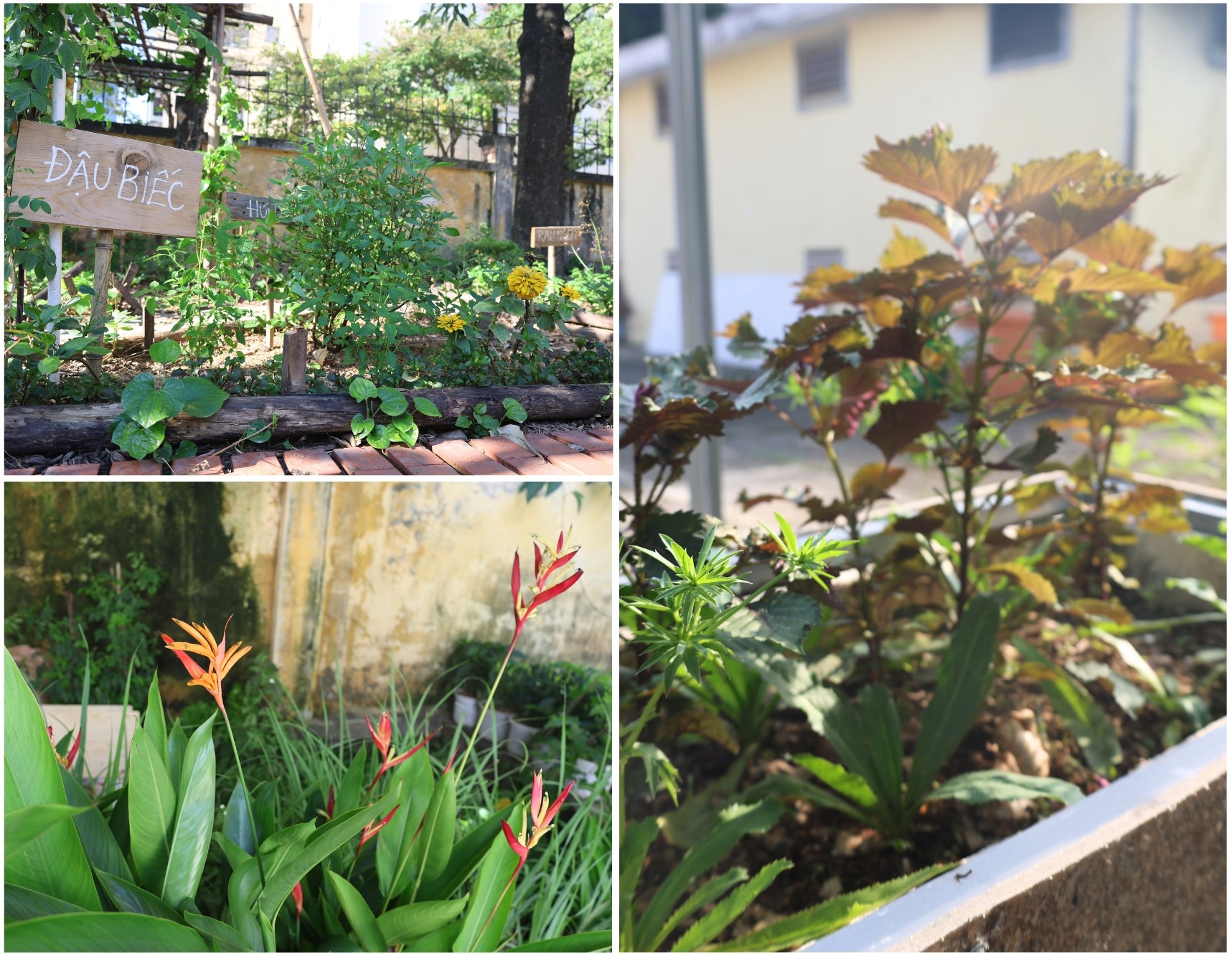
Pham Duc Trung, representative of Project Awe - the design and implementation team - shared:
“Right in the heart of Hanoi, a small garden like this can still support a diverse ecosystem. It’s truly a valuable opportunity for students to connect more closely with nature.”
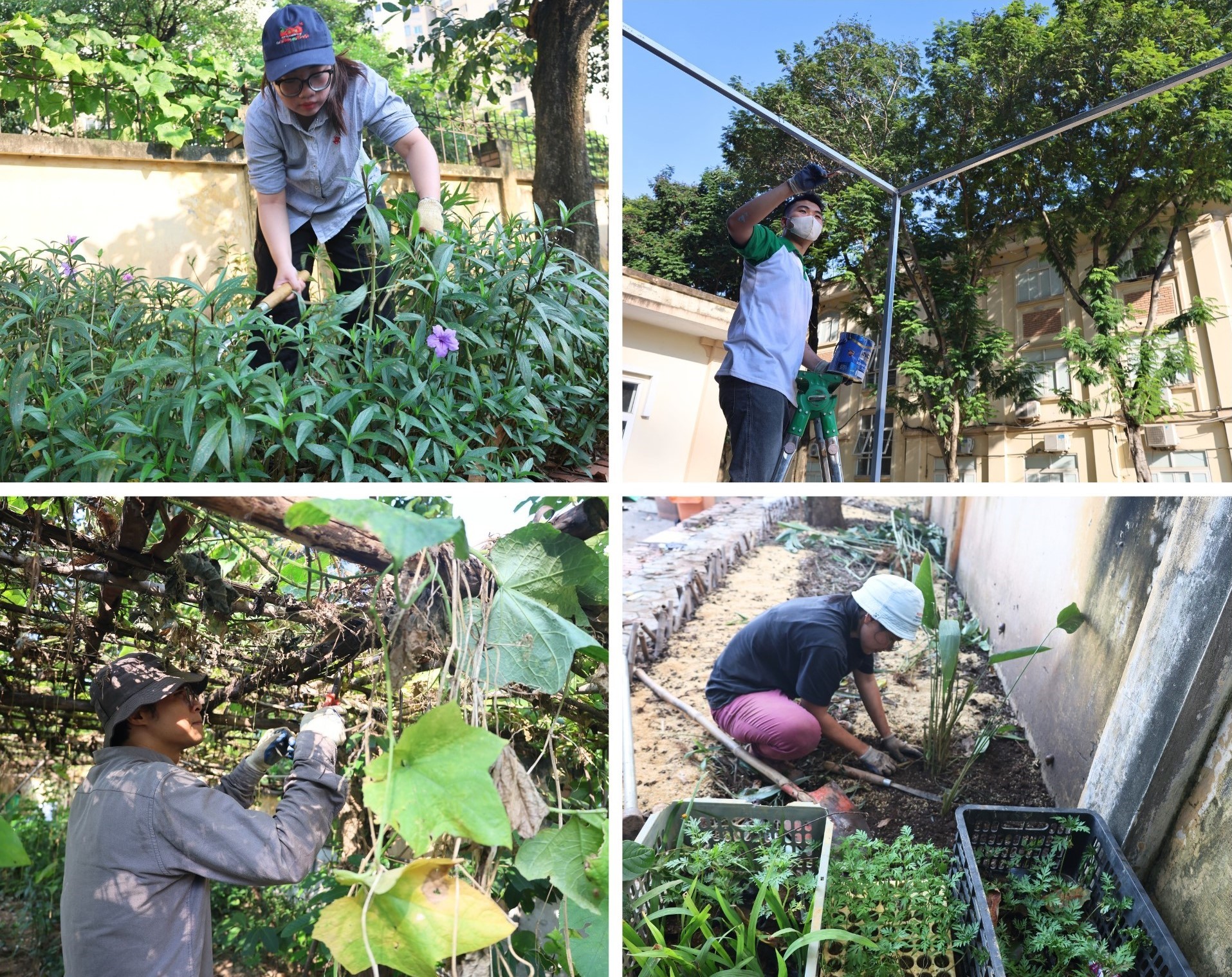
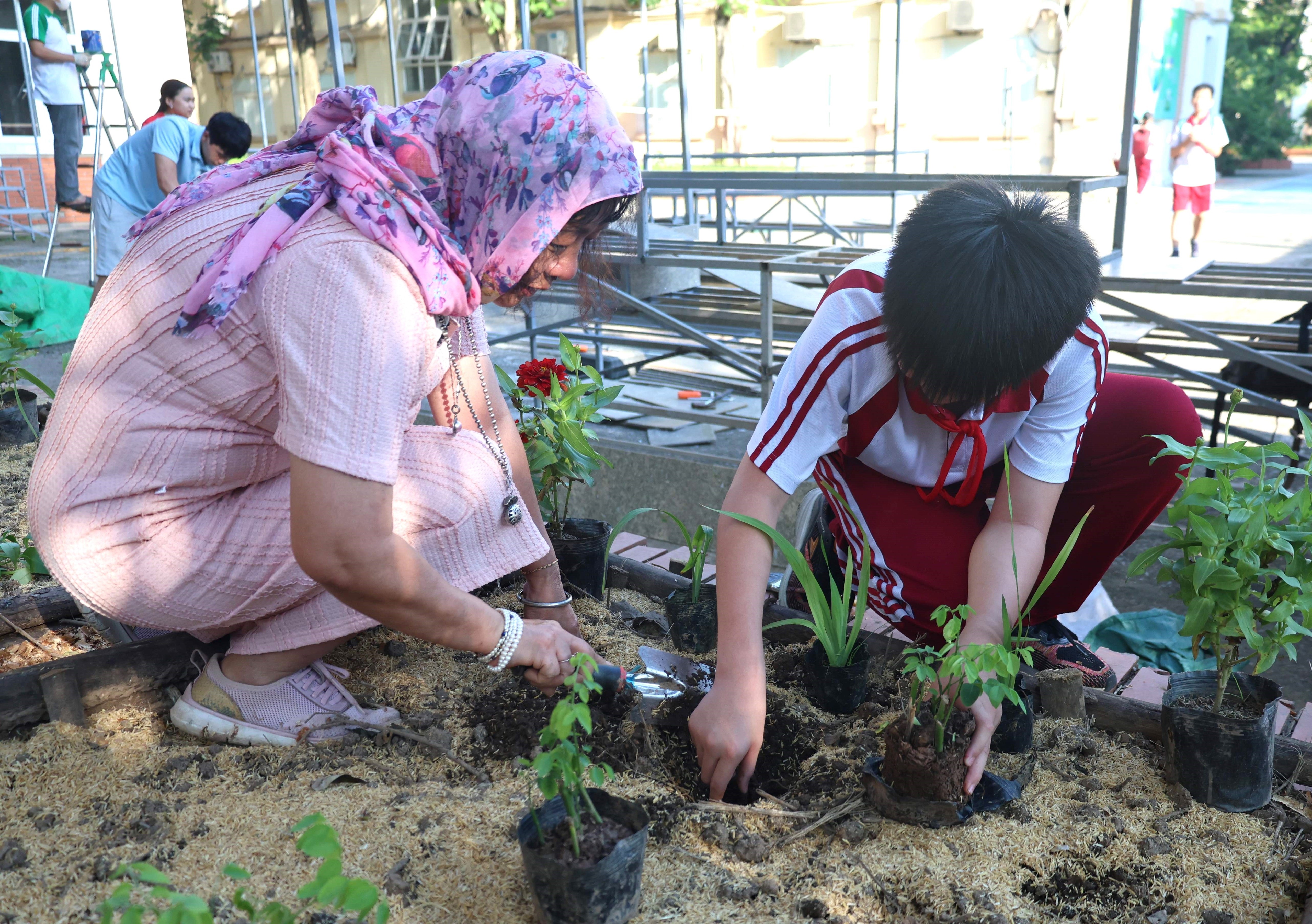
Construction began in June 2025 with participation from the school board, subject teachers, parents, and project experts, with Rikolto and C&E playing a facilitation role. The process followed three stages: planning - assessment, design, and implementation. Students were involved from the very beginning - preparing soil, arranging beds, sowing seeds, caring for plants, and keeping track records. The handover ceremony took place at the start of the 2025 -2026 academic year, marking the school’s commitment to maintaining the garden as part of regular educational activities.

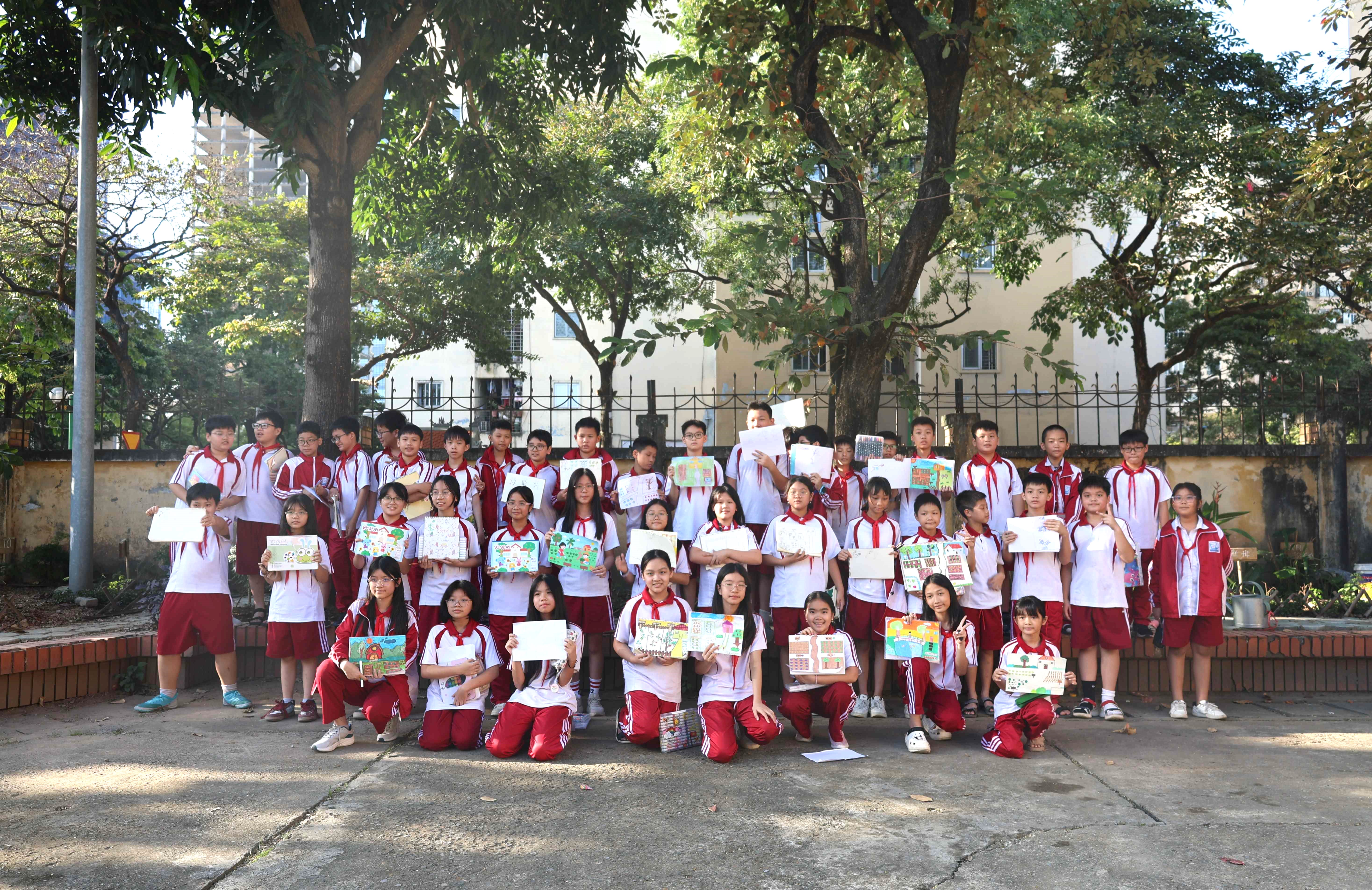
Since coming into use, the garden has become a living practice space for many subjects. Technology classes guide students in growing bean crops and observing their growth. Geography lessons help students memorise and draw a “map” of the garden. Art and Biology classes also benefit from the abundance of real-life materials.
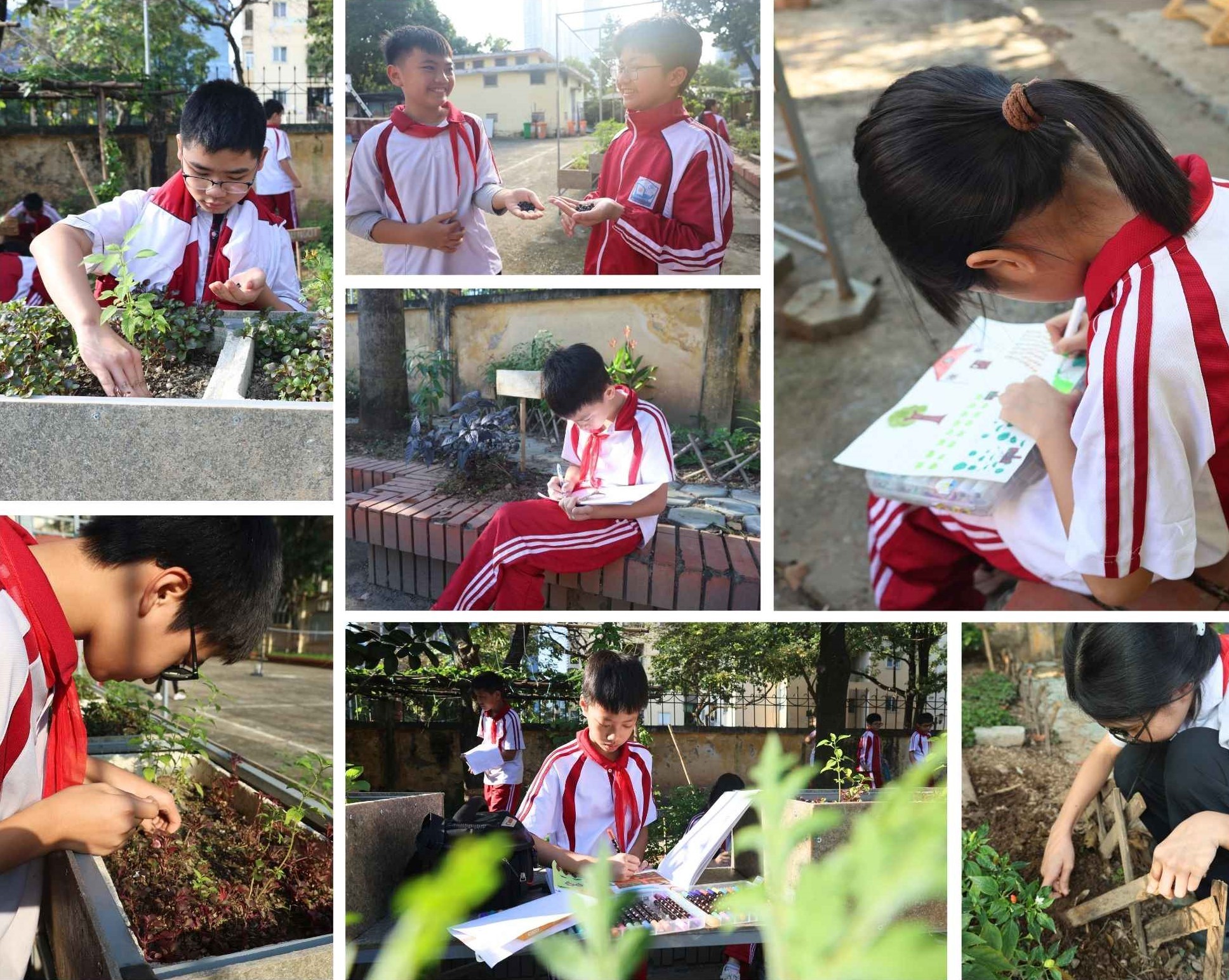
What matters most is the emotional and perceptual change among the students.
“I feel so happy! It feels like I’ve finally returned to nature!”
My Anh, an 8th-grade student, shared enthusiastically after her first time digging soil, trimming roots, transplanting seedlings, and learning how to water plants properly.
Another 8th grader, Duc Minh, said he had always loved planting but, living in an apartment, could only grow a small bean plant on the balcony.
“Here in the school garden, I’ve been able to plant many different kinds! From now on, whenever I’m free at school, I’ll come to the garden to take care of them. I hope someday I can harvest chili here.”
“In increasingly crowded cities, green spaces in schools are shrinking. A small garden is not only a green patch for the urban landscape but also a ‘living classroom’ - a place for students to explore, experience, and build love and responsibility for nature.”
According to Duong Thu Hang, Good Food for Cities Programme Officer of Rikolto:
“By working in the garden, students gain a deeper understanding of local foods and their journey, building gratitude and appreciation for what they eat.”
After receiving the handover, the school assigned the Math - IT - Technology teachers to manage the garden, established a rotating core team to maintain it, and incorporated garden care into the school’s Youth Union movements.
It is hoped that in the coming time, the garden will give Nam Trung Yen students more meaningful and practical lessons, help them better understand the effort behind every meal, and gradually cultivate healthier lifestyles through their own small green space.
Rikolto’s “GoodFood@School” project is currently implemented in four secondary schools in Hanoi of Nam Trung Yen, Yen Hoa, Truong Cong Giai, and Nghia Tan - aiming to strengthen education on safe, healthy, and nutritious food with the participation of students, teachers, parents, school canteens, and food suppliers.
More information about our project: GoodFood@School in Hanoi


.jpg)