Background:
Rikolto International (hereinafter “Rikolto”) is a Non-Government Organisation (NGO)dedicated to transforming food systems to be more inclusive, resilient, and sustainable. Active in 18 countries across Africa, Asia, Latin America and Europe, Rikolto collaborates with farmer organisations, businesses, governments and civil society actors to co-develop actionable and scalable solutions that ensure access to affordable, nutritious food while strengthening local livelihoods and ecosystems.
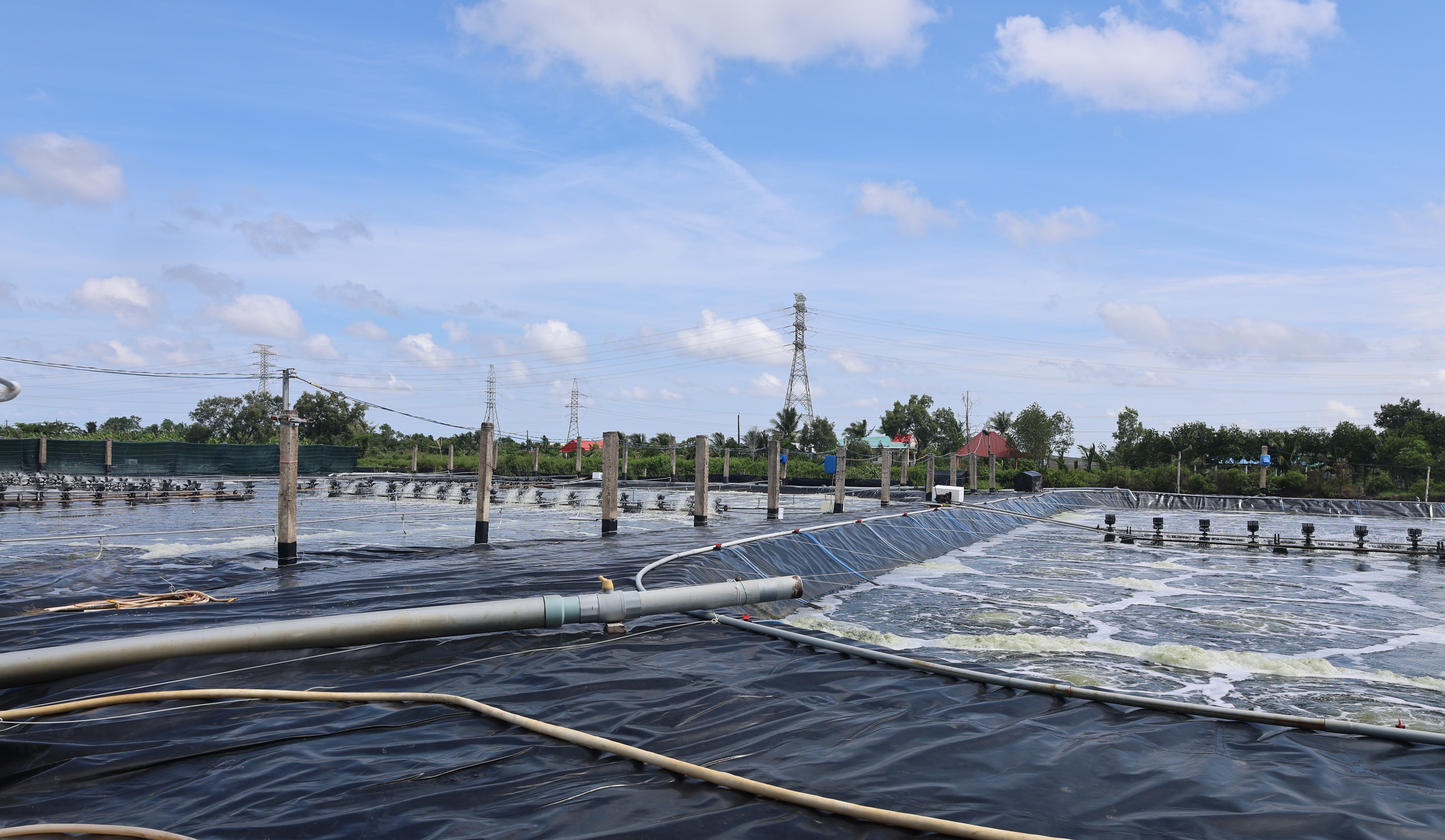
In Vietnam, in collaboration with Vietnam Sustainable Shrimp Alliance and Tay Nguyen University, Rikolto is implementing a project, namely “Driving Inter-Sector Circular Economy for Sustainable Shrimp, Rice and Coffee Farming in Vietnam’s Mekong Delta and Central Highlands”, funded by the European Union (EU), reference number: EuropeAid/183533/DD/ACT/VN. The project aligns with the EU’s Priority 1: to support micro-small-and-medium-sized enterprises (MSMEs) in reducing the environmental impact, improving resource efficiency in their production, and adopting responsible and circular economy practices.
The Project’s overall objective is to contribute to developing a carbon-neutral, responsible and circular economy in Vietnam’s agriculture sector by empowering sustainable MSMEs. To achieve this, the Project has two specific and interconnected objectives. Specific objective 1 - to improve the participation of Non-State Actors (NSAs) in the decision-making process on gender-sensitive, responsible and circular economy practices in Vietnam’s agriculture sector. Specific objective 2 - to increase the adoption of circular economy practices by MSMEs in the shrimp, rice and coffee sectors, promoting interconnected resource efficiency, reducing environmental impact, and sustaining production across integrated supply chains in the Mekong Delta and Central Highlands of Vietnam.
The Project will work with four groups of key stakeholders as follows: (1) Private sector, including MSMEs/cooperatives and farmers engaged in shrimp aquaculture, coffee production and rice cultivation; (2) Business Development Service (BDS) providers, Business Membership Organisations (BMOs) and industry associations; (3) Public sector; (4) Academic institutions and NGOs.
The Project will deliver interventions through four key interlinked activity clusters, including:
- Promoting awareness and engagement of NSAs and relevant stakeholders in circular economy policies and practices;
- Demonstrating circular economy practices in the aquaculture and horticulture commodity sectors through piloting and capacity building for MSMEs/cooperatives and producers;
- Dissemination and replicating knowledge on circular economy practices;
- Promoting an enabling environment and market access for circular economy practices and products in agriculture.
Rikolto is currently seeking a team of consultants and/or consulting firm to conduct the assignment for building capacity (e.g. develop technical guidelines, provide training activities) for local MSMEs, cooperatives, farmers, social enterprises on circular economy in shrimp aquaculture and rice horticulture; and co-design and implement pilot circular economy models, practices including lessons learned, documentation for learning and sharing and; conduct market and policy gaps analysis for trade promotion of agricultural circular economy products.
1. Assignment Overview
The consultants will work on shrimp aquaculture in Ca Mau, rice horticulture in Dong Thap to co-design feasible circular economy pilot solutions/practices/models for local MSMEs, cooperatives and/or farmers; build capacity for the local stakeholders through training, coaching, guidelines and lessons learned development. Gender lenses and inclusive development are required particularly to consider for all activities designed, implemented and assessed under the scope of these assignments. The work package is scheduled to carry out during the period from 1st September 2026 to 15th April 2030. Key activities and scope of work are, but not limited to, as follows:
- Develop technical guidelines, manuals on agricultural circular economy focusing on shrimp aquaculture (e.g. shrimp shell collection, handling, packaging practices at farm; use of upcycled products made from shrimp shell for aquaculture), and rice horticulture (e.g. use of bio-active products, organic fertilizer and relevant technologies, regenerative agriculture for reducing production costs and GHGs).
- Co-design and support implement the pilot solutions for circular economy models/practices in shrimp aquaculture and rice horticulture to support local MSMEs, cooperatives, household farmers in the selected project sites.
- Conduct on-site training and coaching for the local MSMEs, cooperatives, farmers to promote and scale up agricultural circular economy practices, models in the two selected commodities and project sites for 2026 – 2030. The training will include hands-on technical training(33 days) and CE pilot training (39 days) for MSMEs, cooperatives, farmers and social enterprises.
- Collect pilot data, document and disseminate lessons learned from pilot projects and successful CE initiatives in shrimp and rice sectors.
- Build business management, governance capacity for local MSMEs, cooperatives, farmers on promoting circular economy practices.
- Implement gap analysis on market regulatory and CE upscaling circular economy systems to identify gaps, obstacles and “bottlenecks” for increasing market demands or consumption for shrimp and rice products produced in the circular economy practices, models. This is to ensure sustaining the circular economy agriculture supply chain.
Contract type: National Consultancy
Location: Vietnam (Ca Mau and Dong Thap provinces)
Expected starting date: Upon contract signing
2. Key tasks and approaches
The selected consultant(s) will:
- Desk review: Conduct a thorough review of national and sub-national sources, including policy documents, reports, academic literature, food system datasets, and programme evaluations. This will establish a foundational understanding of the national and local contexts and strategies in relation to agriculture circular economy and low carbon development roadmap, identify data gaps and shape the scope of the case study analysis.
- Stakeholder and supply chain mapping: Identify and categorise relevant actors engaged in the selected supply chains (rice and shrimp) at regional and national levels, including authorities, BDS, BMO, farmer organisations, businesses, CSOs, and market actors. Analyse their functions, interests, relationships and influence to inform governance and partnership strategies.
- Fieldwork: Carry out field visits and/or remote engagements in the provinces of Ca Mau, Dong Thap. Conduct interviews, focus group discussions, and direct observations involving farmers, processors, traders, local officials, and consumers. Conduct on-site training/coaching on Circular economy practices for the local MSMEs, farmers at field in the provinces of Ca Mau, Dong Thap; proactively collect data and gather relevant information for documenting, developing lessons learned for sharing and learning purposes.
- Data analysis and synthesis: Descriptive statistics is used to analyse and compile, describe relevant indicators, data and parameters those reflect the nature of the sectors.
- Validation and reporting: Present preliminary findings (virtual or in-person) to key stakeholders and Rikolto staff in a participatory session. Gather feedback to verify accuracy, test assumptions, and refine recommendations. The final report will be a comprehensive analysis report with key contents including numbers of technical booklets developed, co-design circular economy models/practices developed and piloted aggregated by sectors (shrimp, rice); numbers of farmers, MSMEs trained and engaged in the pilot interventions; market and regulatory gaps and challenges, obstacles identified for market development of the agriculture products produced with circular economy practices; analysis of data collected by pilot projects and lessons learnt development for sharing and learning; specific recommendations for scaling up circular economy in inter-sector agriculture in Vietnam.
3. Required Qualifications and Experience
Consultant(s)/consulting firm should demonstrate the following qualifications and experience:
- Have relevant academic qualifications at master's level or above in environmental science, agriculture, food systems, rural development, public policy, or related fields;
- At least 5 years of relevant experience in food system research (focusing on shrimp and rice sectors),carbon footprint and GHG emissions measurement, circular economy, and policy analysis in Vietnam or the Southeast Asia region;
- Proven track record in conducting field-based, participatory research and engaging with multi-stakeholder processes, including smallholder farmers, MSMEs/cooperatives, local authorities, and civil society actors in relation to rice and shrimp sectors in Vietnam;
- Strong understanding of circular economy frameworks, agricultural GHG emissions, waste and by-product management, and environmental sustainability;
- Demonstrated experience in low-carbon agriculture, Environmental, Social, and Governance (ESG), circular economy projects, preferably in the shrimp, rice and coffee sectors in Vietnam;
- Familiarity with Vietnam's policy frameworks relevant to circular economy and sustainable agriculture;
- Excellent analytical, synthesis, and academic writing skills in English; proficiency in Vietnamese is required for fieldwork and stakeholder engagement;
- Familiarity with Rikolto’s thematic priorities and strategic approach, local partners, project areas is a strong advantage.
A detailed description of deliverables, timelines, and expected outputs is available in the Terms of Reference (TOR).
How to apply
Interested consultants should submit the following to us no later than 20th August 2026:
- Curriculum Vitae highlighting relevant academic and professional background.
- Technical proposal (max 10 A4 pages) outlining the consultant’s understanding of the assignment, proposed methodology and timeline.
- Financial proposal, specifying daily consultancy rate (gross) and detailed total cost including travel, accommodation and associated costs for the whole package.
- Sample(s) of relevant previous work (e.g., food system analysis, food system policy and intervention designs).
- Information: for further information clarified, please reach out to us before 15th August 2026.
Please send your application to: vietnam@rikolto.org, in cc to: thong.nguyen@rikolto.org
Subject line: Application – National Consultant – Intersectoral Agricultural Circular Economy Expert for Designing Pilot Solutions and Capacity Building.